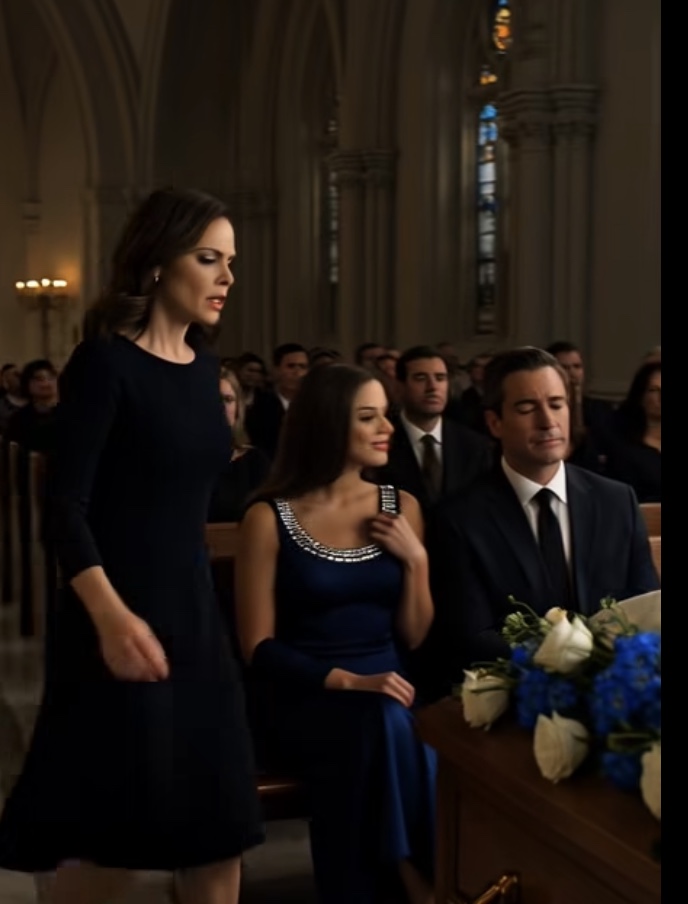
My husband’s mistress wore my missing Versace dress to my father’s funeral. Sat in the family row. Held my husband’s hand. And when my father’s lawyer began the will with, “To my daughter Natalie, who called me yesterday about her husband’s affair…”, I realized the missing dress was just the start of a long humiliation.
The dress had been gone for three weeks. Midnight blue, black in shadow, silver where the hand-sewn crystals along the neckline caught the light. My father had given it to me for my fortieth birthday: “For the nights when you want to remember that elegance is armor.” He believed style could protect a woman, if she wore it right.
I tore through every closet the week before the funeral—garment bags, cedar chest, guest rooms, even the trunk of my car. I accused the dry cleaner, dumped old shoe boxes onto the floor, inhaled dust, leather, stale perfume. Nothing.
By morning, grief had shoved everything else aside. My father was gone. The house smelled of casseroles, lilies, and coffee gone cold. Guests whispered in low voices, touched my wrist like I might shatter. I wore black, simple, because I didn’t trust myself with anything delicate.
St. Augustine’s Cathedral was cool and dim—marble, candle wax, stained glass. The organ murmured under soft conversations. Shoes polished, ties loosened, a hush that rich families call dignity but really means disaster in public.
I stopped at the back, steadying myself. At the front, my father’s casket rested beneath white roses and blue delphiniums. Father Martinez whispered to Mr. Blackwood, Dad’s attorney and oldest friend. Aunt Helen directed relatives with a glare that could throw chaos down a staircase.
Then I saw him. My husband, Grant. Front row, where he belonged. Except he wasn’t alone.
The woman beside him wore my dress.
For a second, my mind refused to process it. The crystals sparkled under the stained glass, scattering red and blue across the pews. My father’s gift, worn by another woman while he lay dead twenty feet away.
My feet moved before I decided to speak or scream.
“Becca,” I said, voice flat and alien to my own ears. “What the hell are you doing here?”
Rebecca Thornton turned with a smile so polished it made my blood boil. Twenty-eight or twenty-nine, glossy brown hair, expensive cheek filler, and a talent for standing too close to married men. She had called me Natalie both times we met, fake warmth dripping off every syllable.
“Natalie,” she said softly, as if we were meeting for brunch, not over my father’s coffin. “I’m so sorry for your loss.” Her hand still held Grant’s.
He finally looked at me. Guilt, not confusion, not shock. Just guilt.
The cathedral seemed to tighten around my ribs. The metallic taste of betrayal filled my mouth. Every late meeting, every cancelled dinner, every vague excuse suddenly lined up. The missing dress? Now it made cruel sense.
“Why is she wearing my dress?” I demanded.
Rebecca crossed her legs, hem shifting. “Oh, this? Grant gave it to me. He said you never wore it.”
I looked at Grant. Eyes dropped so fast it might have been funny in another life. Fifteen years of marriage, and he thought refusing eye contact would fix this.
“Tell me she’s lying,” I said.
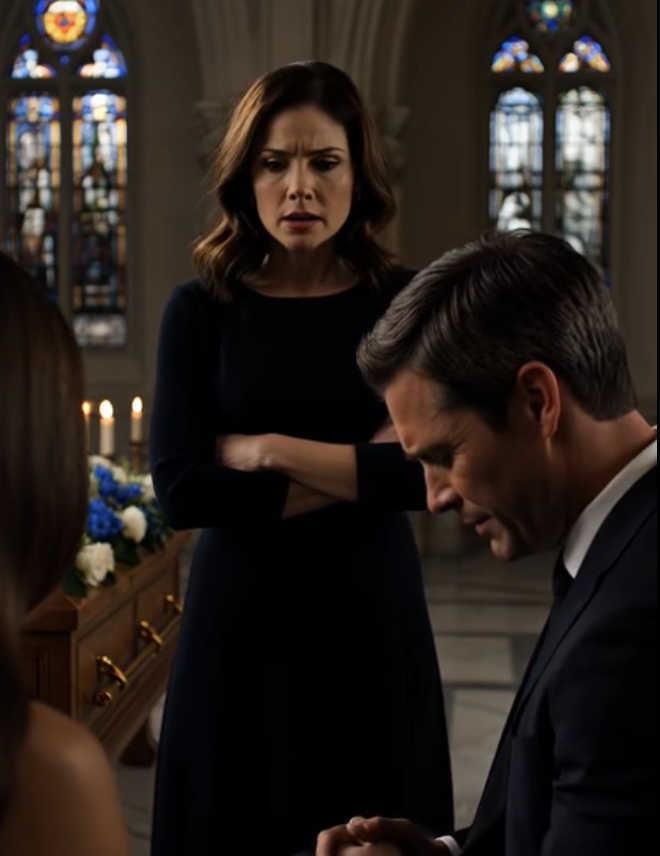
“Natalie,” he muttered, leaning forward, voice low and urgent, as if I was about to embarrass him. “Not here.”
Not here. As if timing mattered more than audacity—the audacity of his mistress in my father’s front pew, wearing my gift.
Across the aisle, Aunt Helen froze. Near the altar, Mr. Blackwood turned, holding a thick cream envelope with my father’s handwriting. Rebecca’s smile faltered for the first time that morning.
In that moment, standing between my father’s casket and my husband’s betrayal, I realized: the missing dress was never the whole story. It was the curtain rising on every lie, every theft, every betrayal that had quietly piled up behind the facade of our lives.
And I knew the real reckoning was just beginning.