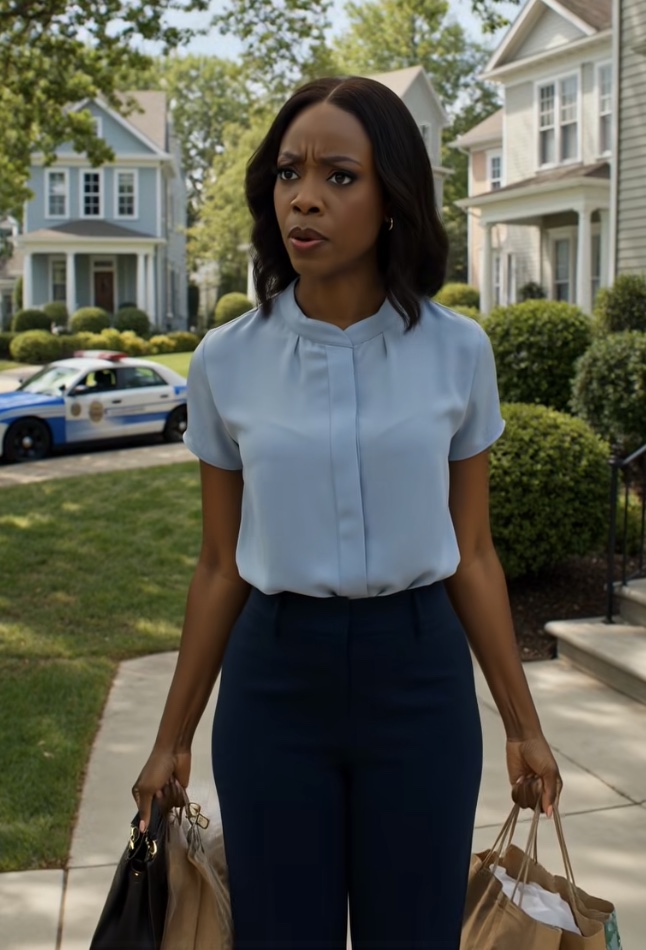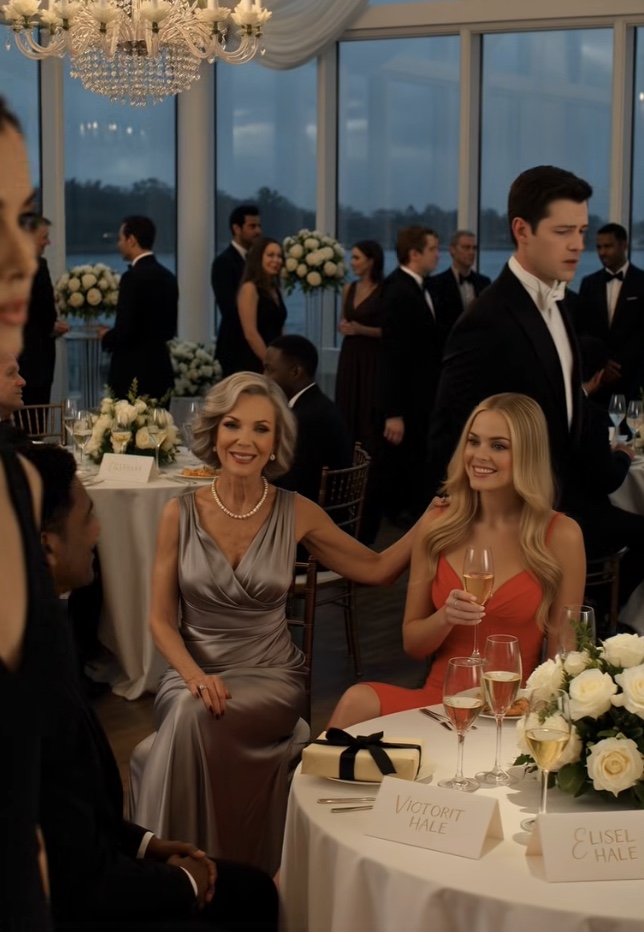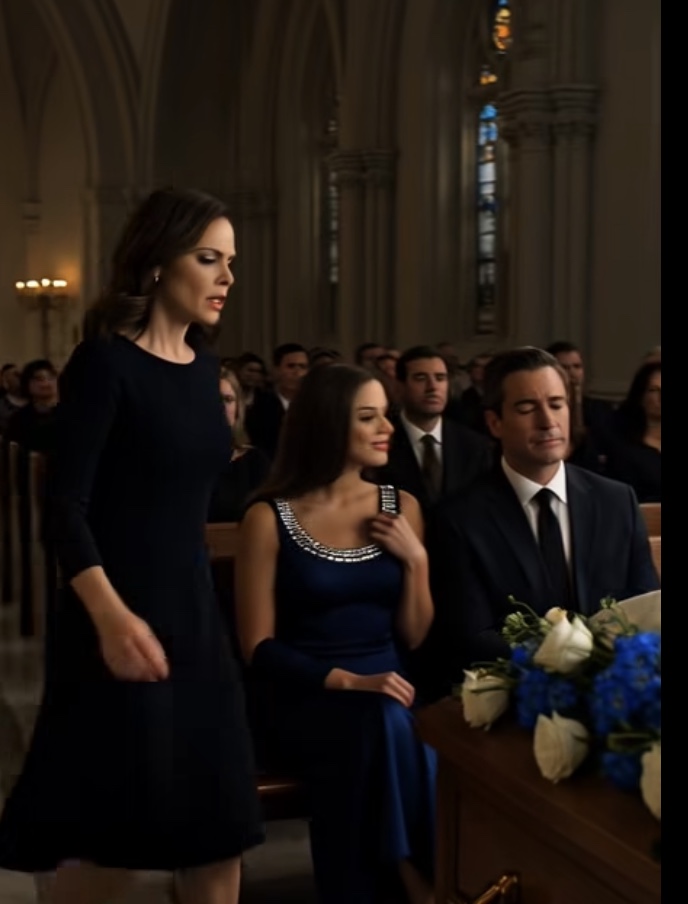
The morning air in Chicago was crisp, but inside the house, the tension was thicker than the fog rolling over Lake Michigan. After yesterday’s decisive stand, I had believed that at least the immediate chaos was contained—but calm is always temporary. Eleanor and James weren’t people who accepted defeat gracefully. They were predators disguised as family, and the day had barely begun.
I awoke to the soft chirping of notifications, the familiar hum of my phone vibrating on the nightstand. The first one made my stomach knot. It wasn’t from a number I recognized, but the tone, clipped and deliberate, was unmistakable. A photo of the front gate appeared—taken in the dead of night. Someone had tried to tamper with the locks after hours. Alongside it was a short message:
“You can lock doors, Isabel… but the eyes never sleep.”
I sat up, coffee forgotten, listening for the faintest sounds outside. Nothing. But Thomas’s words from yesterday echoed in my mind: “Vigilance never ends.” This wasn’t an idle threat; it was a warning, calculated, measured, meant to unsettle.
Downstairs, the staff had already begun their morning routine, more alert than ever. I gathered them in the main hall, reiterating yesterday’s instructions: every action, every call, every delivery—document it, report it immediately, and follow instructions only from Thomas or me. No exceptions. Eyes met mine with a mixture of fatigue and resolve. I knew they had been tested before, and I would not allow them to be caught off guard again.
By 9:00 AM, Eleanor’s first tangible strike materialized. A fleet of email campaigns had been launched—hundreds of messages sent to neighbors, vendors, even distant relatives, painting me as unstable, authoritarian, and unreasonable. In a single paragraph, they implied mismanagement, emotional instability, and questionable judgment. Thomas immediately activated countermeasures. Each claim was documented and disproven with legal filings, contracts, and timestamped communications. Slowly, Eleanor’s attempt to manipulate public perception began to crumble—but the strategy was clear: weaken me psychologically, make staff doubt, and isolate me.
The tension escalated by mid-morning when a car arrived at the gate. Not just any car—a sleek black SUV, tinted windows, license plate unfamiliar. A man in a sharply pressed suit emerged, carrying a thick folder, and asked for James. The guard, unwavering, showed him the notice of revoked access. The man’s expression didn’t falter. Instead, he nodded subtly, as if confirming something I couldn’t yet see. He left, leaving only the scent of cologne and a sense of foreboding. Thomas immediately reviewed security footage. This wasn’t a casual ally; someone connected to Eleanor—or James—or both—was reconnoitering, taking notes, measuring vulnerabilities.
By 11:00 AM, James made his first desperate move within the house. I found him in the study, pacing, muttering into the phone, clearly negotiating something behind closed doors. When he saw me, his posture stiffened. “Isabel… we don’t need to escalate this. Let’s discuss—”
I raised a hand. “There’s nothing to discuss, James. Yesterday was clarity. Today is accountability. And if you attempt anything beyond law or reason, I’ll be ready.”
He paled. The man’s fear was palpable. But Eleanor, unseen, had already orchestrated the next wave. A series of unexpected “visitors” began to appear at the gate—neighbors pretending to be concerned citizens, delivery personnel with suspiciously timed packages, even a local journalist claiming interest in “a family dispute escalating in Chicago’s affluent community.” All were intercepted by Thomas and staff. Each interaction was calm but firm. Rules, authority, and meticulous documentation became shields against chaos. I realized, though, that Eleanor’s tactic was no longer about the house itself—it was about perception. She wanted me to appear weak, reactive, and isolated.
At noon, the most shocking moment arrived. A social media post appeared, shared widely among local circles. Eleanor’s name wasn’t on it—but the content was unmistakable: doctored photos of yesterday’s confrontations, misrepresented conversations, and insinuations that I had “intimidated” staff and family members. Comments poured in rapidly—curiosity, outrage, condemnation. I felt the familiar twinge of anxiety that comes from public scrutiny, but I had anticipated this. Thomas was already coordinating a formal response: a press release, verified documentation, and a professional briefing to ensure that truth reached the same audience before the rumor could solidify.
Still, the digital attack had its effect. I could feel the pressure mounting as calls came in—concerned friends, loyal staff, even a few hesitant neighbors. My hands tightened around my coffee cup. I reminded myself that controlling narrative isn’t about silencing voices—it’s about overwhelming falsehoods with fact.
By early afternoon, a subtle, almost imperceptible tension had settled into the house. I felt it in every step—staff moving slightly faster, guests who had returned for yesterday’s planned birthday festivities glancing nervously at each other, even my grandson sensing the shift. Children are remarkably perceptive. I went to him, kneeling on the carpet as he arranged action figures in a loose circle.
“Grandma,” he asked softly, “will they try to take the house again?”
I looked into his eyes, full of innocence yet tinged with a perceptive unease. “They might, sweetheart. But we’re ready. Remember what we talked about yesterday? Preparation, knowledge, standing firm. Today, that will protect us again.”
He nodded slowly, absorbing my words. I realized then that the battle wasn’t just legal—it was emotional, psychological, and generational. Protecting him meant preparing him, too, in subtle ways, without breaking his trust in the world.
At 2:00 PM, the day took an even darker turn. A series of anonymous phone calls began. Not threats, not pleasantries—just recordings, faint background noises, whispers implying surveillance and infiltration. The messages were crafted to unsettle, to make me question the loyalty of staff or the security of my own home. Thomas advised calm. Every call was logged, every number traced, every step reinforced in our digital and physical security protocol. Yet, even as I understood it intellectually, the visceral impact of Eleanor’s reach made my pulse quicken.
By mid-afternoon, a courier arrived with a package addressed simply to me. I opened it carefully. Inside, a single key—a skeleton key, clearly old and worn—and a note scrawled in elegant handwriting:
“Some doors cannot be closed. Some truths cannot stay buried. Tonight, they reveal themselves.”
I swallowed hard. Eleanor’s tactics were no longer purely legal or social—they were symbolic, psychological. The message was clear: she wanted me questioning, doubting, afraid. But I wouldn’t yield.
By 5:00 PM, the house was a labyrinth of vigilance. Staff were stationed strategically, security cameras feeding into multiple monitors, emergency contacts on speed dial, Thomas coordinating in a nearby office. The air smelled faintly of lingering cake, disinfectant, and tension—a blend that I would come to associate with victory and survival in equal measure.
Then came the first direct confrontation. Eleanor herself entered the house, unannounced, flanked by two women I didn’t recognize—apparently accomplices, friends, or allies. She was impeccably dressed, but her composure had cracks: eyes darting, hands clenched, lips pressed into a thin line.
“Isabel,” she said, voice sweetened but sharp, “I warned you. You think the house is safe? You think victory is yours? Let’s see how well you hold it when shadows move.”
I met her gaze evenly, hand resting lightly on my grandson’s back, who had followed me into the room. “Eleanor, I am ready. Your shadows cannot touch what is built on truth and preparation. Leave now—or be documented. Every word, every step, every motion. You have no ground here.”
A tense pause. Eleanor’s jaw tightened. One of her allies stepped forward, subtly attempting to reach for the staircase leading to my grandson’s room. Thomas intervened instantly, positioning himself firmly, his calm voice cutting through the tension: “You do not proceed. You are trespassing.”
Eleanor’s lips twitched, a flash of fury and desperation crossing her face. “So it begins,” she hissed, turning sharply and leaving without another word. Her exit was a promise, not a retreat.
The house remained tense long after she left. Every corner, every hallway, every room seemed to hum with the residual energy of confrontation. I gathered the staff once again, reinforcing protocols and morale. Loyalty, clarity, and preparation—these were the pillars that would carry us through the night and the days to come.
By evening, a sense of grim anticipation settled over the home. Thomas reviewed the day’s events: attempted social manipulation, surveillance, direct confrontation, and psychological tactics. “They’ve tested everything that’s visible,” he said. “Now they’ll attempt subtler moves. Emails, texts, financial leverage, perhaps even legal appeals. But we’ve anticipated most of it.”
I nodded, feeling both exhaustion and exhilaration. Today had revealed the true depth of Eleanor and James’s strategies—their audacity, their networks, their willingness to blur the lines between family, manipulation, and intimidation. And yet, I had seen something else: cracks. Hesitation. Fear. Recognition that they could not breach the preparation, evidence, and authority I now wielded.
As night fell, I went upstairs to my grandson’s room. He was lying under a blanket, toy astronaut clutched to his chest. I sat beside him, brushing hair from his forehead. “Tomorrow will be another day,” I whispered. “But we will meet it as we have today—prepared, firm, unafraid.”
He smiled sleepily, murmuring, “I’m glad you’re here, Grandma. I like being safe.”
And I realized, in that quiet, fleeting moment, that every legal document, every protective measure, every confrontation—was for this. For him. For the innocence that deserved to flourish amidst the chaos that adults create.
But as I turned off the light, a notification blinked on my phone. Another unknown number, another message:
“The game is far from over. Look closely. Allies wear masks. Shadows have friends.”
I stared at it, pulse steady, mind alert. The battle was escalating beyond my anticipation. Eleanor and James were no longer just family attempting to manipulate—they had mobilized, deployed subtle threats, and drawn in unseen forces.
Yet, for the first time in decades, I felt a quiet, unwavering certainty. Every tactic they had used, every shadow they had cast, could be countered with preparation, clarity, and resolve. I had learned this lesson slowly, painfully, and now it was my advantage.
The night stretched long and tense. Security cameras monitored the perimeter, logs recorded every incoming call and email, and Thomas stayed nearby, eyes flicking across multiple screens. The house, once merely a place of residence, had become a fortress, a stage for strategy, a theater of inevitability where the rules had shifted irrevocably.
I finally went to bed, lying awake as the city’s lights flickered through the blinds. The shadows outside were not idle—they were moving, calculating. I could hear faint sounds of distant traffic, birds stirring, the whisper of wind along the sidewalks. And yet, within the walls of my home, within the control I had painstakingly rebuilt, I felt strength, resolve, and an unwavering commitment to protect, defend, and endure.
Tomorrow promised more confrontation. Legal maneuvers, psychological warfare, and the potential for revelations I could not yet anticipate. But I was ready. More than ready. Because the first decisive victories had been won, lessons had been learned, and the house—and my grandson—were firmly within my guardianship.
I whispered into the dark, as much to myself as to the universe:
“We stand firm. And shadows, no matter how numerous, cannot overwhelm what is prepared and resolute.”
The war continued. And I was prepared to meet it—head-on, with intelligence, courage, and the unwavering knowledge that love and vigilance would always prevail.