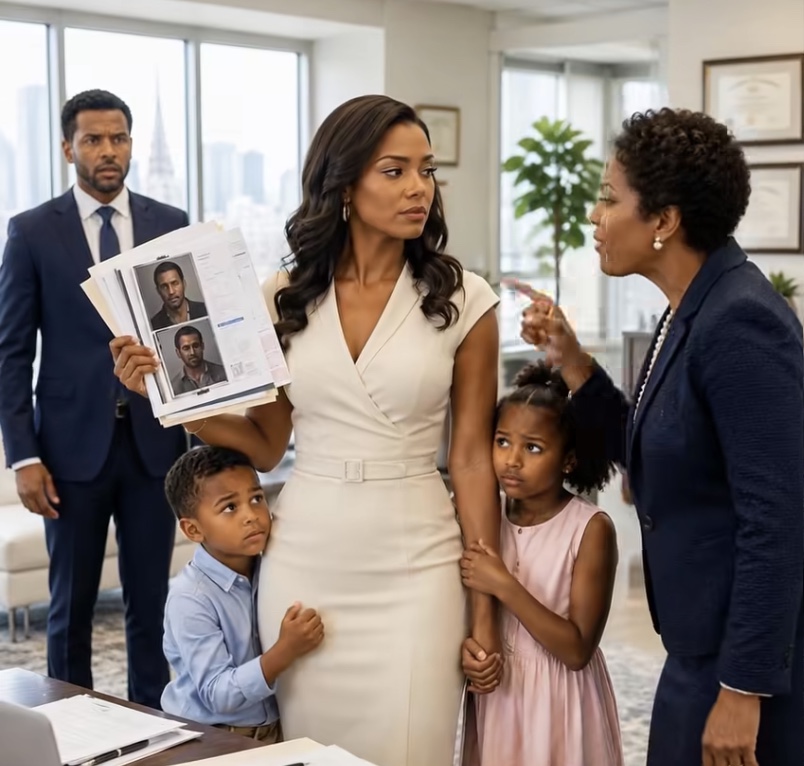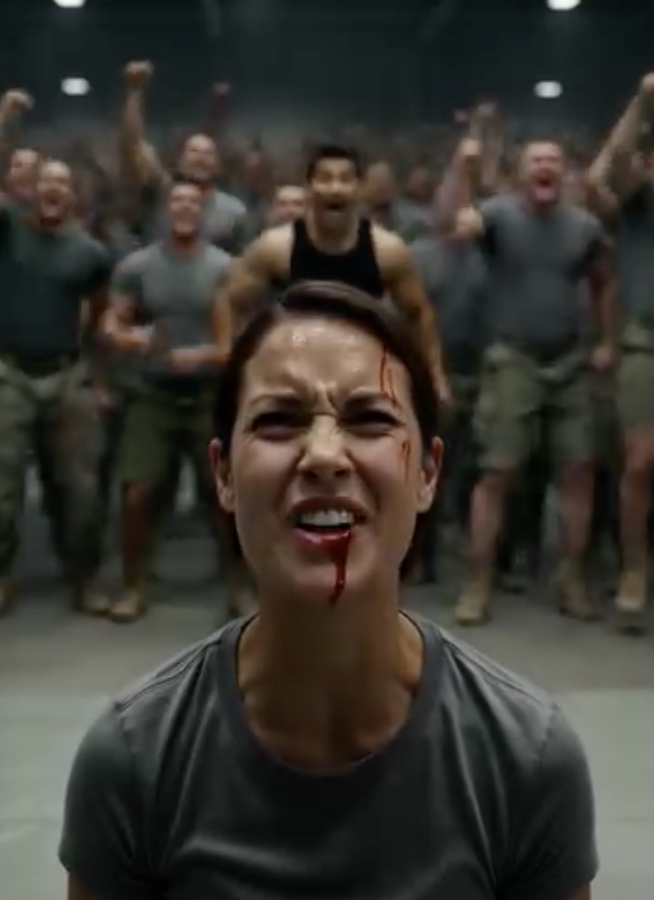
When a soldier comes home from war, he expects many things. He expects silence to feel different. He expects the bed to seem too soft, the streets too clean, the sound of fireworks too much like gunfire. He expects his children to have grown taller, his wife to have changed her hair, his house to need repairs. But Captain Daniel Carter never expected to step off a bus after four years overseas and find not a family waiting for him, but two abandoned children, a brave daughter who had become a mother too soon, a little boy who barely remembered his father’s face, and a scarred old dog who had become their only protector after love betrayed them.
The morning air was cold enough to sting his lungs. Daniel stepped down from the Greyhound bus with his duffel bag hanging from one shoulder and his uniform wrinkled from the long ride. The town looked smaller than he remembered. The diner on the corner still had the same faded sign. The church bell still rang at eight. The streets were still lined with oak trees that dropped brown leaves into the gutters every November. Everything looked familiar, and yet Daniel felt like a stranger walking through a memory that no longer belonged to him.

He had been gone almost four years. Iraq had taken friends, pieces of his hearing, two inches of scar tissue along his left side, and the easy version of the man he used to be. It had also taken his marriage, though he had not wanted to admit that part until the letters stopped. At first, Rachel had written every week. She sent pictures of Emily holding school certificates, little Noah asleep in a dinosaur shirt, the backyard after a summer storm, the front porch with pumpkins in October. She wrote about bills, repairs, school meetings, and how hard it was to be alone. Daniel wrote back whenever he could, folding love and apology into every page. Then her letters became shorter. Then colder. Then rare. A year ago, they stopped altogether.
When he called, she often did not answer. When she did, there was noise in the background, music, laughter, sometimes a man’s voice she explained away too quickly. “Don’t start, Daniel,” she had said during their last real conversation. “You don’t know what it’s like here.” He had wanted to say, “And you don’t know what it’s like here either,” but he swallowed the words. War had taught him that not every battle deserved the ammunition.
Still, he believed the children were safe. He had to believe that. Emily had been nine when he deployed, old enough to understand goodbye but too young to carry it gracefully. Noah had been barely three, still small enough to fall asleep against Daniel’s chest with one fist tangled in his shirt. Daniel had left with their faces pressed into his memory like photographs hidden inside his helmet. Through every convoy, every night watch, every explosion that turned the world white, he promised himself he would make it home to them.
Now he was home.
But no one was waiting at the station.
Daniel took a cab to the old house because the driver said it was too far to walk with a bag. As the car turned onto Maple Street, Daniel sat forward. His heart began to beat harder. The houses rolled past, familiar porches, familiar fences, familiar lawns. Then the cab slowed in front of the small white house he had bought with Rachel twelve years earlier, back when they were young enough to believe love alone could hold a roof together.
The first thing he noticed was the mailbox. It hung crookedly from one screw, the red flag dangling loose like a broken arm. The second thing he noticed was the yard. The grass had gone wild in patches, then died in others. A plastic truck lay overturned near the porch, half-buried in leaves. The paint on the railing had peeled in long strips. One shutter was missing. The porch light was shattered. The house did not look lived in. It looked endured.
Daniel paid the driver, stepped out, and stood with his duffel bag in his hand as the cab pulled away. For a moment, he could not move. The cold wind pressed through his uniform, but he barely felt it. He was looking at the front window, where a small face had appeared behind the dusty glass.
A girl.
Thin. Pale. Older than she should have looked.
Her eyes widened.
The door opened slowly.
“Daddy?”
The word broke something in him.
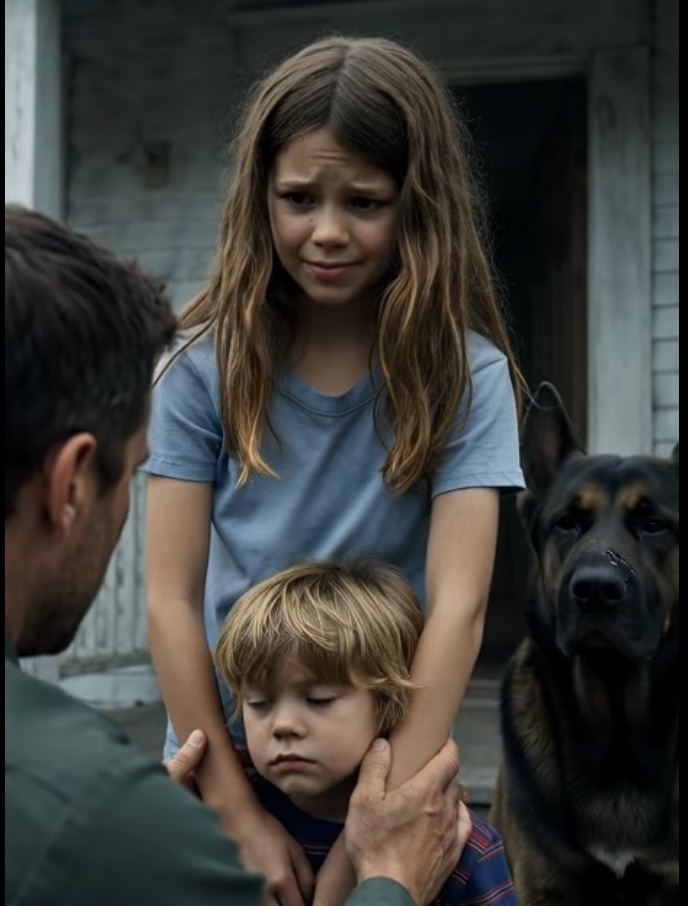
Emily stepped onto the porch barefoot, wearing leggings with a hole at one knee and a sweater too small for her wrists. Her hair was tangled, her face sharper than the child he remembered, but her eyes were the same. Carol-blue, Rachel used to call them, though Daniel had never known who Carol was. Behind Emily, a smaller boy clutched her hand. Noah. Six now, maybe seven in the way he stood, though fear made him look younger. He stared at Daniel like he was trying to match the man in front of him to a faded picture.
“Em?” Daniel dropped the duffel bag.
Emily ran.
She hit him so hard he staggered backward, then wrapped her arms around his waist and held on as if she had been holding herself together for years and had finally been given permission to fall apart. Daniel knelt in the wet grass and pulled her into his chest. Her shoulders shook, but no sound came out at first. Then she made a small broken noise that tore through him worse than any battlefield wound.
“My girl,” he whispered, pressing his face into her hair. “My brave girl. I’m here. I’m home.”
Noah stood a few feet away, still holding the doorframe. Daniel reached out carefully. “Hey, buddy.”
Noah did not move.
Emily turned, wiping her face with her sleeve. “It’s Daddy,” she told him softly. “Remember the pictures?”
Noah looked uncertain. “Daddy was in the phone.”
Daniel swallowed hard. “I know. I’m sorry.”
That was when the dog appeared.
He came from the side of the house, large and dark, with a broad head, a scar across one ear, and ribs that showed beneath his coat. He moved stiffly, like an animal that had learned every injury by name. His eyes locked on Daniel. He did not bark at first. He placed himself between Daniel and the children, lowering his head, watching.
Emily quickly stepped forward. “Duke, no. It’s okay.”
The dog did not look away from Daniel.
Daniel understood the posture. He had seen it in military dogs overseas, in men on patrol, in anyone who had spent too long knowing danger could arrive smiling. This dog had been guarding something. Not a yard. Not a house.
The children.
Daniel slowly lowered his hand, palm open. “Good boy,” he said quietly. “You did good.”
Duke stared for another second, then barked once. Not friendly. Not hostile. A warning and a question. Then he stepped back beside Emily, still watching.
Daniel stood slowly and looked toward the house. “Where’s your mom?”
Emily’s face changed. She looked down at her bare feet. Noah pressed against her side.
“She left,” Emily said.
Daniel felt the words enter him, but his mind refused to arrange them into meaning. “What do you mean, she left?”
“She said she was going to California,” Emily whispered. “She said she’d come back when things got better.”
“When?” Daniel asked.
Emily did not answer.
“When, Emily?”
Her eyes filled with tears. “A long time ago.”
Daniel’s voice cracked. “How long?”
Emily looked toward the street as if someone might come and punish her for telling. “Seven months.”
The world tilted.
Daniel grabbed the porch railing to steady himself. “Seven months?”
Emily nodded.
“So who’s been taking care of you?”
The answer came quietly.
“Me. And Duke.”
Noah finally spoke. “Duke scares bad people.”
Daniel looked at the dog. Duke stood with his body angled toward the street, one ear lifted, always listening. A silent guardian with no badge, no uniform, no promise except the one he had somehow made to two abandoned children.
Daniel wanted to cry. He wanted to scream. He wanted to find Rachel and shake the truth out of her. But Emily was watching him. Noah was watching him. Duke was watching him too, as if deciding whether this father who had returned from war would be strong enough for the battle waiting inside his own home.
Daniel picked up his duffel bag and followed the children into the house.
Inside, the truth was worse.
The living room smelled of dust, damp carpet, and canned food. A pile of unopened mail sat near the door. The kitchen sink held two bowls and one cracked plate. The refrigerator contained half a loaf of bread, a jar of peanut butter, ketchup, and a carton of milk two days from expiring. In the pantry, Daniel found noodles, rice, cereal, and cans of soup stacked neatly at the front, with the oldest in back. Emily had organized them like supplies for a siege.
The electricity was still on, barely. The heat worked in short bursts. The water ran cold for almost a minute before turning warm. In the children’s bedroom, Daniel found both beds pushed close together, blankets layered over them, and Duke’s old blanket on the floor directly in front of the door.
“He sleeps there,” Emily said. “So nobody can come in.”
Daniel turned away so they would not see his face.
That night, he made grilled cheese sandwiches and tomato soup. It was not much, but Noah ate like a starving child, and Emily kept trying to save half of hers until Daniel gently pushed the plate back toward her.
“You eat,” he said. “There will be more tomorrow.”
She looked at him like she did not fully believe that.
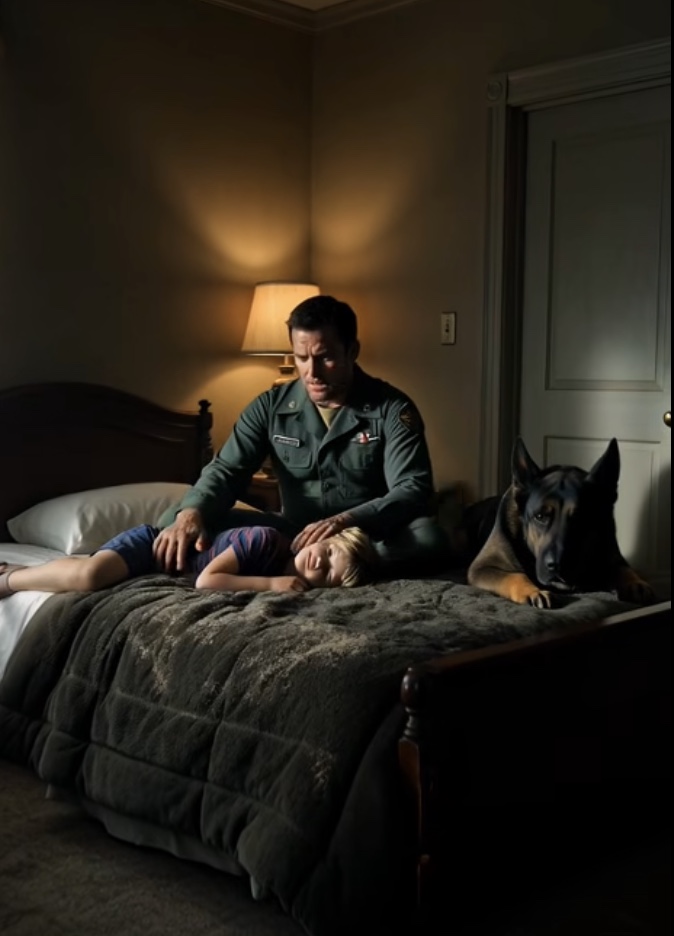
After dinner, Daniel bathed Noah, found pajamas that still fit, and tucked both children into the same bed because they did not want to sleep apart. Duke lay at the door, head on his paws, eyes open. Emily reached for Daniel’s sleeve as he stood.
“Are you leaving again?”
The question emptied him.
Daniel sat beside her and took her hand. “No.”
“Promise?”
“I promise.”
“Mom promised too.”
Daniel closed his eyes. When he opened them, he chose every word carefully. “Then I’ll make you a different kind of promise. I won’t say it unless I mean it. And if I ever have to leave the house, I’ll tell you where I’m going and when I’ll be back.”
Emily studied him, looking for cracks.
“Okay,” she whispered.
He stayed until both children fell asleep. Only then did he walk into the hallway, slide down the wall, and finally break. He covered his mouth with one hand so they would not hear him. The sobs came without sound, hard and violent. He had survived roadside bombs, gunfire, and nights when the desert seemed to breathe death. But nothing in war had prepared him for a pantry organized by an eleven-year-old girl because no adult had come to save her.
Duke rose from the floor and walked over. The dog stood in front of Daniel for a moment, then lowered himself beside him with a groan. Daniel put a hand on his scarred head.
“Thank you,” he whispered.
Duke sighed as if the responsibility had been heavy and long.
The next morning, Daniel began making calls. First to the school. Emily had missed too many days, but not enough for anyone to understand the full truth. She had invented stomachaches, forged notes, and sometimes walked Noah to school before coming home to sleep because she had stayed up all night listening for sounds outside. Then Daniel called the utility company, the bank, the family services office, and finally a lawyer recommended by an old army friend.
By noon, he understood the shape of Rachel’s betrayal.
She had emptied their savings in small withdrawals. She had stopped paying certain bills but kept others alive just enough to avoid attention. She had told neighbors Daniel knew about her trip. She had told the school the children were staying with relatives during the summer, then sent occasional emails from a new account pretending to be engaged. She had left Emily with a prepaid phone and instructions not to “make trouble” unless she wanted child services to split her and Noah apart.
That was why Emily had stayed quiet.
Not because she was careless.
Because she was terrified.
When Daniel asked where Duke came from, Emily told him the story. Three months after Rachel left, a man had started coming around the house. He claimed Rachel owed him money. He banged on the door at night. One evening, while Emily hid with Noah in the bedroom, Duke appeared on the porch out of nowhere, muddy, bleeding from one shoulder, and growling like thunder. The man backed away. Duke stayed. Emily fed him scraps. After that, he never left.
“He knew we were alone,” Emily said.
Daniel looked at Duke asleep beneath the kitchen table and nodded. “Yeah. He knew.”
The weeks that followed were not easy. Homecoming stories often end at the hug, but real life begins after it. Daniel had nightmares. Noah screamed if Daniel closed a door too hard. Emily hoarded food under her bed. Duke growled at every unfamiliar car. Social workers came. So did police. Forms were filled out. Statements were taken. A custody emergency order was filed. Rachel was eventually found in California, living under her maiden name with a man who did not know she had two children in Oregon. She cried during the video hearing and said she had been overwhelmed. She said military life had broken her. She said she intended to come back.
Daniel listened from a lawyer’s office with Emily beside him and Noah coloring at a small table.
When it was his turn to speak, he said only one thing.
“Being overwhelmed explains leaving a marriage. It does not explain abandoning children.”
The judge granted Daniel full temporary custody, then permanent custody months later. Rachel was ordered to undergo evaluation and supervised visitation if the children ever agreed to it. Emily did not. Noah barely remembered her. Daniel did not force them. He had learned something important in war and grief: not every wound should be reopened just because someone else wants forgiveness.
Slowly, the house changed.
Daniel repaired the mailbox first. Then the porch light. Then the shutter. He painted the railing with Emily, who got more paint on her hands than the wood. He turned the wild backyard into a vegetable garden again because Noah wanted carrots “from dirt.” He bought new locks, a new phone, and a dog bed Duke refused to use because he preferred sleeping across the children’s doorway. Daniel enrolled in counseling through the veterans’ center and found a therapist for Emily and Noah. At first, Emily said she did not need one. Then one afternoon, she admitted she had forgotten what it felt like to be a kid.
That sentence stayed with Daniel for the rest of his life.
So he made it his mission to give childhood back to her piece by piece. Pancakes on Saturdays. Library cards. New shoes. A birthday party with too many balloons. A school backpack she had chosen herself instead of one from the lost-and-found bin. He taught Noah how to ride a bike and taught Emily how to check the oil in the truck because she insisted she wanted to know useful things. They made a rule that the pantry would always have extra food, but nothing had to be hidden under beds anymore.
Duke became a legend in the neighborhood. Children asked to pet him. Adults gave him respectful distance. The mailman carried treats. The school made him an unofficial mascot after Emily wrote an essay titled “The Dog Who Stayed.” In it, she wrote, “Some people say dogs don’t understand promises, but Duke did. He didn’t say he would protect us. He just did it.”
Daniel kept that essay folded in his wallet.
A year after Daniel came home, the local veterans’ group held a small ceremony for him. They wanted to honor his service overseas. Daniel stood at the front of the community hall in a clean shirt, uncomfortable with attention. Emily sat in the first row holding Noah’s hand. Duke lay at their feet, gray around the muzzle now, but still alert.
When Daniel was asked to speak, he looked at the room full of people expecting him to talk about war.
Instead, he talked about home.
“I used to think courage was something you proved far away,” he said. “In deserts. In convoys. Under fire. I was wrong. Courage can be an eleven-year-old girl feeding her brother dinner when she’s scared. It can be a little boy learning to trust a father he barely remembers. It can be a stray dog standing on a porch and deciding two children are his to guard. I came home thinking I was the soldier. But my children and that dog had been fighting a battle here long before I arrived.”
Emily cried. Noah leaned against her. Duke lifted his head at the sound of Daniel’s voice, then settled again.
Years later, when people asked Daniel what saved his family, he never gave the answer they expected. Some thought he would say the Army taught him discipline. Others thought he would say the courts gave him justice. But Daniel always looked toward Duke, slower now, older now, sleeping in a patch of sunlight near the front door.
“He did,” Daniel would say. “He held the line until I got home.”
And every November, when the air turned cold enough to sting his lungs, Daniel remembered that morning at the bus station, the broken mailbox, the barefoot girl at the door, the little boy hiding behind her, and the scarred dog who barked once before deciding whether he could trust the man who had finally returned.
The hardest battles were not always fought overseas.
Sometimes they were fought in quiet houses, by children who should have been protected, by fathers trying to rebuild what betrayal left behind, and by loyal dogs who understood that love is not the person who promises to stay.
Love is the one who does.