They told her to kneel, but what she said next made two hundred and eighty Navy SEALs go completely silent. There were two hundred and eighty men watching when they ordered me to kneel, and every single one of them already believed they knew exactly how the story would end. To them, I was not introduced as one of the highest-rated corpsmen ever to pass through the program. Nobody mentioned the years of combat medical training, the survival certifications, the field trauma records, or the fact that I had been trained to turn panic into precision while other people froze under pressure. None of that mattered the moment I stepped onto the mat. All they saw was a woman standing in a place they didn’t think she belonged.
My name is Lieutenant Mara Ellison, United States Navy, and I had spent most of my career learning how to stay calm when the world turned red. I had stitched wounds in the back of helicopters, held pressure on arteries under fire, dragged men heavier than me through mud while rounds cracked overhead, and listened to soldiers beg me not to let them die. I had watched courage leave men’s faces and then watched it come back when they realized someone was still fighting for them. I knew fear. I knew pain. I knew what a human body could survive and what it could not. But that morning, inside the training hall at Coronado, surrounded by men who looked at me like I was an insult to the floor beneath their boots, I understood that the battle in front of me was not only physical.

I wasn’t just fighting for myself anymore. I was fighting every closed door, every silent dismissal, every smirk from men who believed strength had one shape and one voice. I was fighting for every woman who had ever been told she was too small, too soft, too emotional, too distracting, too much of a risk. I was fighting for the version of myself who had once stood outside an instructor’s office at twenty-two years old and heard him say, “She’s good, but she’ll break when it gets ugly.” He did not know I was listening. He did not know ugliness had already raised me.
Across the mat, Reed looked relaxed. Confident. Like the outcome had already been written before the match even started. Lieutenant Commander Reed Briggs was the kind of man other men followed without asking why. Six foot three, carved from muscle and arrogance, with a reputation for breaking candidates who arrived thinking reputation mattered. He rolled his shoulders once, glanced toward the crowd, then looked directly at me with a smile that carried more insult than amusement.
“Kneel,” he said calmly, “and we can finish this with dignity.”
Laughter spread through the hall almost instantly. Not nervous laughter. Certain laughter. The kind that comes from people who are convinced they are about to witness someone fail exactly the way they expected. I did not answer him. I just watched. The room. The fighters. The instructors near the wall. The way the men shifted their weight. The way Reed breathed. The confidence sitting in his posture before a single strike had been thrown. They believed they had already won.
Then he moved first.
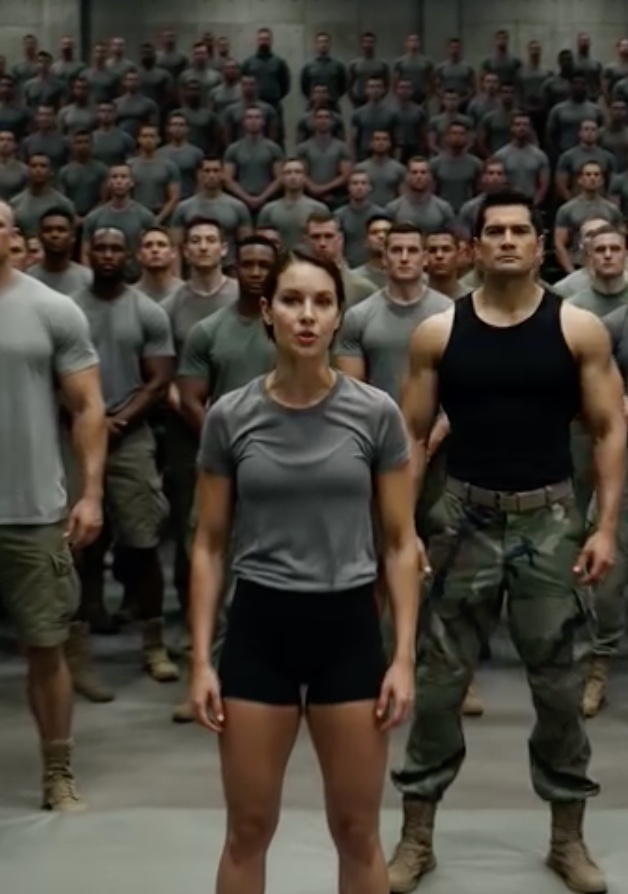
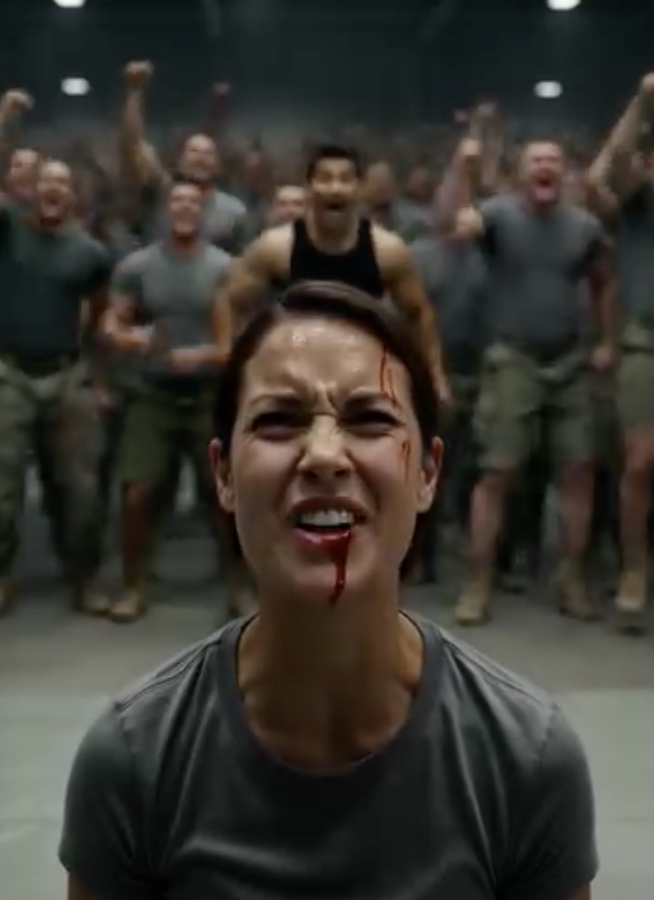
Fast. Violent. Too fast for someone his size, but not too fast to read. His shoulder dipped half a second before the strike came. I saw it, but I let him land enough of it to understand his weight. Pain exploded through my side as his forearm drove into my ribs, and the next thing I knew, my body slammed hard against the mat. The crowd erupted. Shouts. Cheers. Boots pounding against the ground. Blood filled my mouth instantly, warm against my tongue as noise crashed from every direction. To them, this was confirmation. Proof of everything they already believed about me. For a few seconds, there was only chaos.
Then came four seconds of absolute clarity.
In combat medicine, four seconds can decide whether a man breathes or bleeds out. Four seconds is enough to see a chest rise unevenly. Enough to spot a tremor in a hand. Enough to hear the difference between anger and exhaustion. Lying there on the mat with Reed standing above me, I heard his breathing change. Not much. Just enough. A sharp pull on the inhale. A small delay before he reset his stance. His right leg carried too much weight. His left shoulder was protecting something. His eyes were bright, but his pupils were wrong for the room.
I pushed myself up slowly. The crowd quieted a little, disappointed that I was still moving. Reed stepped closer and lowered his voice. “Stay down.”
I spat blood onto the mat and looked up at him. “Your left arm is numb.”
His smile vanished for half a second. That was the first crack.
I stood.
The laughter faded around the edges.
Reed’s jaw tightened. “What did you say?”
I wiped my mouth with the back of my hand. “Your left arm is numb. Your breathing is shallow. You’ve had chest pressure since morning, but you told yourself it was nothing because men like you would rather die standing than admit something is wrong.”
The room changed.
It did not go fully silent yet, but the noise dropped low enough for everyone to hear Reed inhale. The instructor at the far wall uncrossed his arms. Reed took one step toward me. “You trying to play doctor now?”
“I am a doctor’s hands when doctors are not there,” I said. “And right now, you are showing signs of a cardiac event.”
A few men laughed again, but this time the laughter was uncertain. Reed’s face darkened. “You think you can scare me because you can’t beat me?”
“No,” I said. “I think you’re scared because you know I’m right.”
He lunged.
This time I did not let the full strike land. I pivoted, caught his wrist, and redirected his momentum just enough to send him past me instead of through me. He recovered fast, but the movement cost him. I saw the pain flash across his face before he buried it. He came again, heavier, angrier. Anger makes strong men predictable. He swung wide. I ducked, stepped inside, and struck—not to injure, not to humiliate, but to test balance. His right knee buckled for a fraction of a second. He hid it well. Not well enough.
“Stop the match,” I said.
Reed barked a laugh. “You don’t give orders here.”
I turned toward the senior instructor, Commander Hale, standing near the wall. “Sir, stop the match.”
The hall erupted in jeers.
“Afraid now?”
“Finish it, Briggs!”
“Let her quit!”
Reed smiled again, feeding off the noise. “You heard them, Lieutenant. Kneel.”
That word again.
Kneel.
It rolled across the mat like a command from every man who had ever mistaken control for strength. My ribs burned. My mouth tasted like iron. My knees wanted the floor. But not because he ordered it. Never because he ordered it.
I looked at Reed and said clearly, “I will kneel when I’m saving your life.”
The words cut through the room like a blade.
This time, the silence came all at once.
Two hundred and eighty Navy SEALs stopped laughing.
Reed stared at me. His face twisted with fury, but under it was something else now. Fear. Real fear. He opened his mouth to answer, then his hand went to his chest.
It happened fast after that.
His expression went blank. His knees dipped. For one impossible second, the most feared man on that mat looked confused, like his own body had betrayed him without asking permission. Then he collapsed.
I moved before anyone else did.
By the time Reed hit the mat, I was already beside him. “Medical kit!” I shouted. “Now!”
Nobody moved for half a second. Shock has weight. Even trained men can freeze when reality breaks formation. I looked up and used the voice I had used in combat zones when hesitation meant death.
“Move!”
The room exploded into motion.
I checked Reed’s airway, pulse, breathing. His skin had gone clammy. His pulse was irregular, weak in a way that made my stomach tighten. Commander Hale dropped to one knee beside me, his face pale. “What do you need?”
“AED. Oxygen. Call emergency transport. Tell them suspected myocardial infarction with arrhythmia.” I tore open Reed’s shirt. Someone shoved the medical kit beside me. I placed electrodes with hands that did not shake. My ribs screamed every time I leaned forward, but pain was background noise now. Reed was no longer my opponent. He was a patient. That mattered more than pride, more than the crowd, more than anything he had said to me.
The AED analyzed.
No one spoke.
A voice from the machine advised shock.
“Clear!” I shouted.
Men who had faced bullets stepped back from electricity like children before thunder.
The shock hit. Reed’s body jerked. I went back to compressions. Count. Depth. Rhythm. Breathe. Check. Again. The room had become narrow, shrinking to my hands, Reed’s chest, the pulse under my fingers, the seconds I was trying to steal back from death.
“Come on, Briggs,” I muttered. “You don’t get to die after being that annoying.”
Someone near me gave a broken laugh, then swallowed it.
On the second shock, Reed’s pulse returned.
Weak. But there.
The ambulance team arrived six minutes later. By then, I had him stabilized enough to move. As they loaded him onto the stretcher, Reed’s eyes fluttered open. He looked disoriented, furious, embarrassed, and alive. His gaze found mine.
I expected anger.
Instead, he whispered, “You knew.”
I leaned closer. “I listened.”
That was all.
They took him out through the double doors. The sound of the stretcher wheels faded down the hall. Nobody moved. Two hundred and eighty men stood around the mat where blood, sweat, and arrogance had mixed with the truth none of them had wanted to see.
Commander Hale turned to me. “Lieutenant Ellison.”
“Yes, sir.”
He looked at my split lip, my bruised side, the torn sleeve of my uniform, and then at the silent room.
“Report to medical.”
I nodded. “After I clean the mat, sir.”
He almost smiled. “That was not a request.”
At the infirmary, the doctor told me I had two bruised ribs, a split lip, and a mild concussion. He also told me Reed Briggs would likely survive because intervention happened within minutes. “Another ten minutes,” he said, “and we’d be having a different conversation.”
By evening, the story had already spread across the base. By morning, it had become legend, which meant half of it was already wrong. Some said I had knocked Reed out. Some said I had diagnosed him from across the room. Some said I had saved him after he insulted me because I wanted to prove a point. They were all missing the truth.
I saved him because that was the job.
Three days later, Commander Hale called me into his office. Reed was there, seated stiffly in a chair, pale but upright. He looked smaller outside the training hall. Not weak, just human. That alone made the room feel different.
For a moment, none of us spoke.
Then Reed stood.
I expected him to offer a formal apology, the kind men give when ordered by superiors. Instead, he looked me in the eye and said, “I was wrong.”
It was not eloquent. It was not dramatic. But it was the first honest thing I had ever heard him say.
I waited.
He swallowed. “About you. About what I thought I saw when you walked in. About what strength looks like.” His voice roughened. “And I owe you my life.”
I nodded once. “Yes, you do.”
Commander Hale’s eyebrows lifted, but Reed let out a short breath that was almost a laugh.
“I suppose I do,” he said.
I could have softened it. Many women learn to soften truth so men can survive hearing it. I was tired of that. Reed did not need comfort. He needed the truth that had arrived too late for his pride but just in time for his heart.
“The problem wasn’t that you underestimated me,” I said. “The problem was that everyone in that room did. And because you were all busy deciding I didn’t belong, you missed the fact that you were dying in front of them.”
Reed looked down.
Commander Hale said nothing.
I continued. “That is the danger of arrogance. It narrows the room. You stop seeing what is real and start seeing only what confirms what you already believe.”
The office was quiet.
Finally, Reed nodded. “Understood.”
But the real reckoning came one week later.
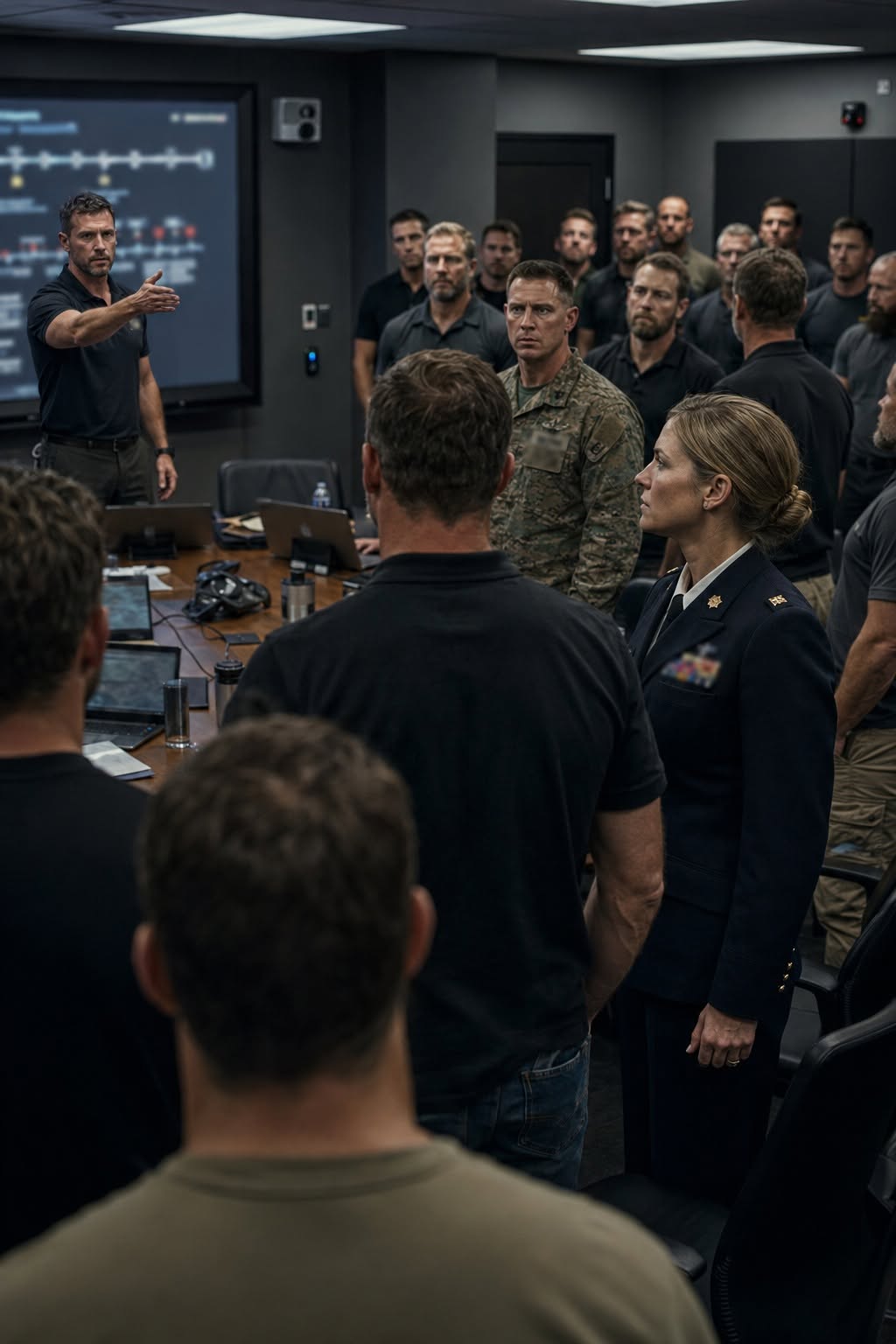
Commander Hale assembled the entire training unit in the same hall where Reed had collapsed. Two hundred and eighty men stood in formation. I stood near the front, my ribs taped beneath my uniform, my lip healing, my face calm.
Hale addressed them first. He did not raise his voice. He did not need to.
“Last week,” he said, “many of you witnessed a failure. Not Lieutenant Ellison’s failure. Not Lieutenant Commander Briggs’s failure alone. A collective failure. You allowed bias to override observation. You allowed noise to replace discipline. You saw a teammate get hit and cheered. You saw a medical professional issue a warning and laughed. That is not toughness. That is stupidity wearing a uniform.”
No one moved.
Then he turned to me. “Lieutenant Ellison.”
I stepped forward.
For the first time since entering that program, the room did not feel like a wall. It felt like a test they were finally taking with me instead of against me.
I looked across the rows of faces. Some were ashamed. Some defensive. Some unreadable. But every eye was on me now for a different reason.
“You told me to kneel,” I said.
No one breathed.
“So I did. I knelt beside a man who mocked me and kept him alive. Not because he deserved my pride. Not because I wanted his approval. Because the mission comes before ego. Because discipline means seeing what is true even when it humiliates you. Because strength is not how loudly you laugh when someone falls. Strength is what you do in the four seconds after.”
The silence was complete.
I let it sit there.
Then I said, “If you ever stand beside me in combat, I will fight to bring you home. Even if you doubted me. Even if you laughed. Even if you were wrong. But understand this clearly: I will not kneel because I am ordered to submit. I will kneel only to save a life, treat a wound, or pray over the fallen. Never for your pride.”
No one clapped at first.
That mattered.
Applause would have made it easy, turned the moment into performance. Instead, there was silence, the heavy, honest kind that comes when people are forced to meet themselves without excuses.
Then Reed stepped out of formation.
He walked to the center of the mat, faced me, and lowered himself to one knee.
The room froze.
“I was wrong,” he said, loud enough for every man to hear. “And I am alive because Lieutenant Ellison was better than I deserved.”
One by one, the others followed.
Not all at once. Not theatrically. But slowly, quietly, men lowered themselves to one knee across the training hall. Two hundred and eighty Navy SEALs, silent not because they had been defeated, but because they had finally understood.
I did not smile. I did not celebrate. This was not revenge. It was recognition, and recognition had come at the cost of a man almost dying.
Months later, people still talked about that day. Some told it like a triumph. Some told it like a warning. Reed returned to duty after surgery and months of recovery, changed in ways only those closest to him could measure. He was still hard. Still demanding. But he listened more. He watched more. And when new candidates arrived, especially the ones others were quick to underestimate, Reed was often the first to say, “Look twice before you decide what someone is.”
As for me, I continued my work. I trained. I treated. I stood in rooms where I was still sometimes underestimated. The difference was that I no longer wasted breath trying to convince everyone before the fight began. I had learned something that day too.
You cannot force people to see you.
But you can make the truth impossible to ignore.
They ordered me to kneel because they thought it would prove I did not belong there. Instead, I knelt beside the man who gave the order and pulled him back from death while two hundred and eighty of the toughest men in the Navy watched in silence.
That was the day they learned what I had known all along.
A woman does not have to become less compassionate to be strong.
And a warrior does not become weaker because she saves the life of the man who mocked her.